
Ah Muzencab (The Mayan Bee God)
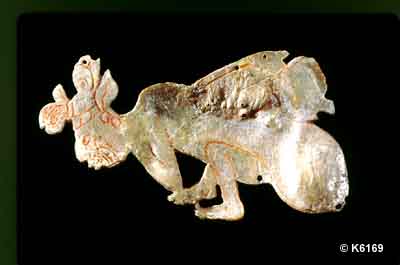
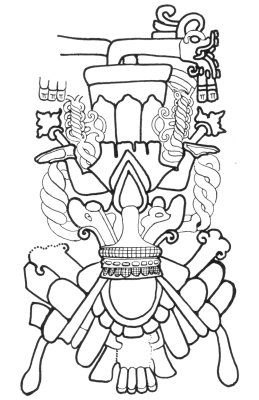
http://www.bibliotecapleyades.net/chilam_balam/cbc06.htm
Reports Folder
Bee Space
In 1851 the Reverend Lorenzo Lorraine Langstroth (1810-1895), a native of Philadelphia, discovered that if a space of 1 cm (3/8 inch) is left in the hive for the bees to move around in, the bees will neither build comb in the space nor cement it shut. This he called “bee space.”
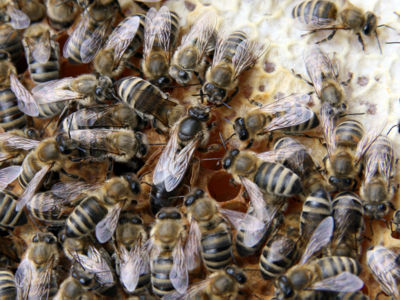
In the years 1845-1850 Dr. Jan Dzierżon determined the correct distance needed to space the top bars movable frames in beehives. The distance between combs had been described as 1½ inches (38.1 mm) from the center of one top bar to the center of the next one. In this case, the distance between combs is 1/2 inch (12.7 mm), i.e. twice the minimal “bee space” of 1/4 an inch (6.35 mm). This setup had been established for the brood chamber, as for honey storage the comb distance can be different.
In 1848 Jan Dzierzon introduced grooves into the hive’s side walls to replace the strips of wood that the top bars had earlier been hung from.[2] The grooves were 8 x 8 mm – an average between 1/4 and 3/8 of an inch. Currently, 3/8 of an inch (6.35 – 9.53 mm) is named “bee space”.
Heavy Aura
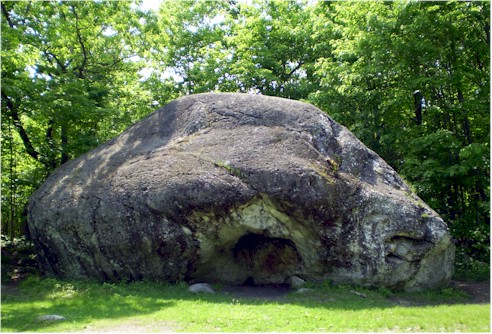
I meditated for 3 hours in the woods and then when I opened my eyes I was surrounded by a thick, stone like substance, it was very heavy and difficult to move, but as I dragged myself along it dissipated.
Subtle or Light Body
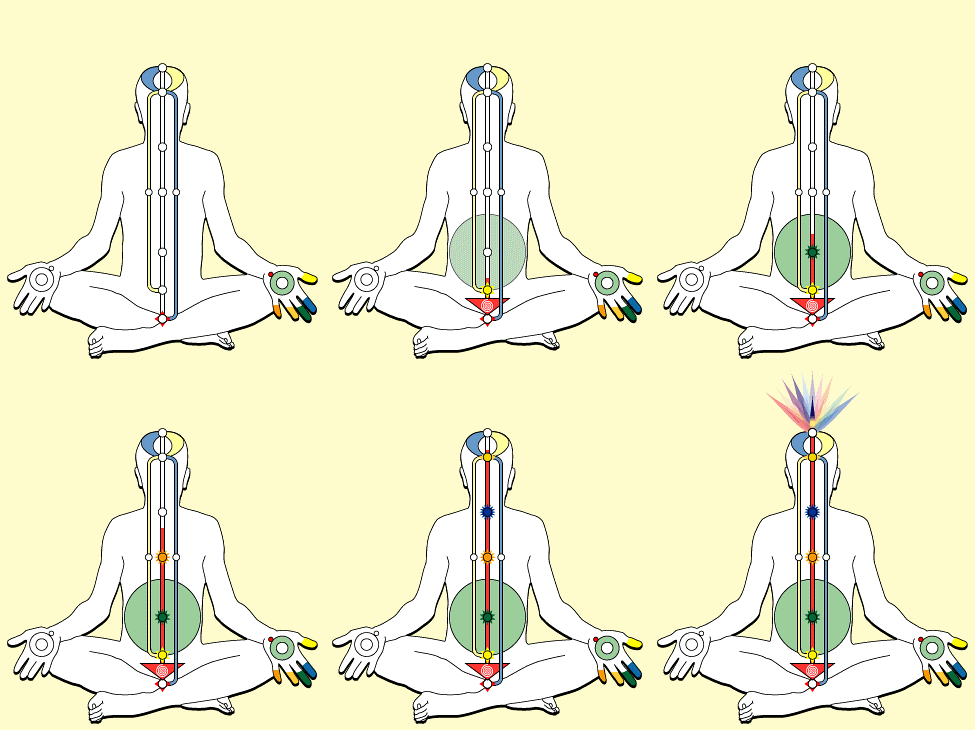
In the Judeo-Christian tradition, it is called “the resurrection body ” and “the glorified body.”
In Sufism it is called “the most sacred body ” (wujud al-aqdas) and “supracelestial body ” (jism asli haqiqi).
In Taoism, it is called “the diamond body,” and those who have attained it are called “the immortals” and “the cloudwalkers.”
In Tibetan Buddhism it is called “the light body.”
In Tantrism and some schools of yoga, it is called “the vajra body,” “the adamantine body,” and “the divine body.”
In Kriya yoga it is called “the body of bliss.”
In Vedanta it is called “the superconductive body.”
In Gnosticism and Neoplatonism, it is called “the radiant body.”
In the alchemical tradition, the Emerald Tablet calls it “the Glory of the Whole Universe” and “the golden body.” The alchemist Paracelsus called it “the astral body.”
In the Hermetic Corpus, it is called “the immortal body ” (soma athanaton).
In some mystery schools, it is called “the solar body.”
In Rosicrucianism, it is called “the diamond body of the temple of God.”
In ancient Egypt it was called “the luminous body or being” (akh).
In Old Persia it was called “the indwelling divine potential” (fravashi or fravarti).
In the Mithraic liturgy it was called “the perfect body ” (soma teilion).
In the philosophy of Sri Aurobindo, it is called “the divine body,” composed of supramental substance.
In the philosophy of Teilhard de Chardin, it is called “the ultrahuman.”